


KeShaun Pearson was sitting across from Memphis Mayor Paul Young on June 5, 2024, discussing environmental justice. They’d spent nearly an hour talking about how to build an environmental justice plan for the city, how to ensure new projects didn’t perpetuate environmental racism, and how to look at solar energy for powering different parts of Memphis.
At the end of the meeting, the mayor said something that stopped the conversation cold: “I don’t think we're going to agree on this, but I'm going to tell you anyway.”
KeShaun waited, hesitantly. We just spent an hour talking about environmental justice. What could you possibly tell me that we wouldn’t agree on?
“Elon Musk is bringing a company to Memphis. A data center.”
KeShaun’s first question was immediate: “Where?”
KeShaun grew up in South Memphis. He knew how this worked. Projects of that size, projects that need land, that need water, that come with pollution, they go one place.
“Where in South Memphis?” He asked, more pointedly this time.
The mayor claimed not to know all the details. “Multi-phase project,” he muttered, deflecting. He didn't know how much energy it would need, how much water. Didn’t know how much pollution it would cause.
Minutes later, the deal hit the news.
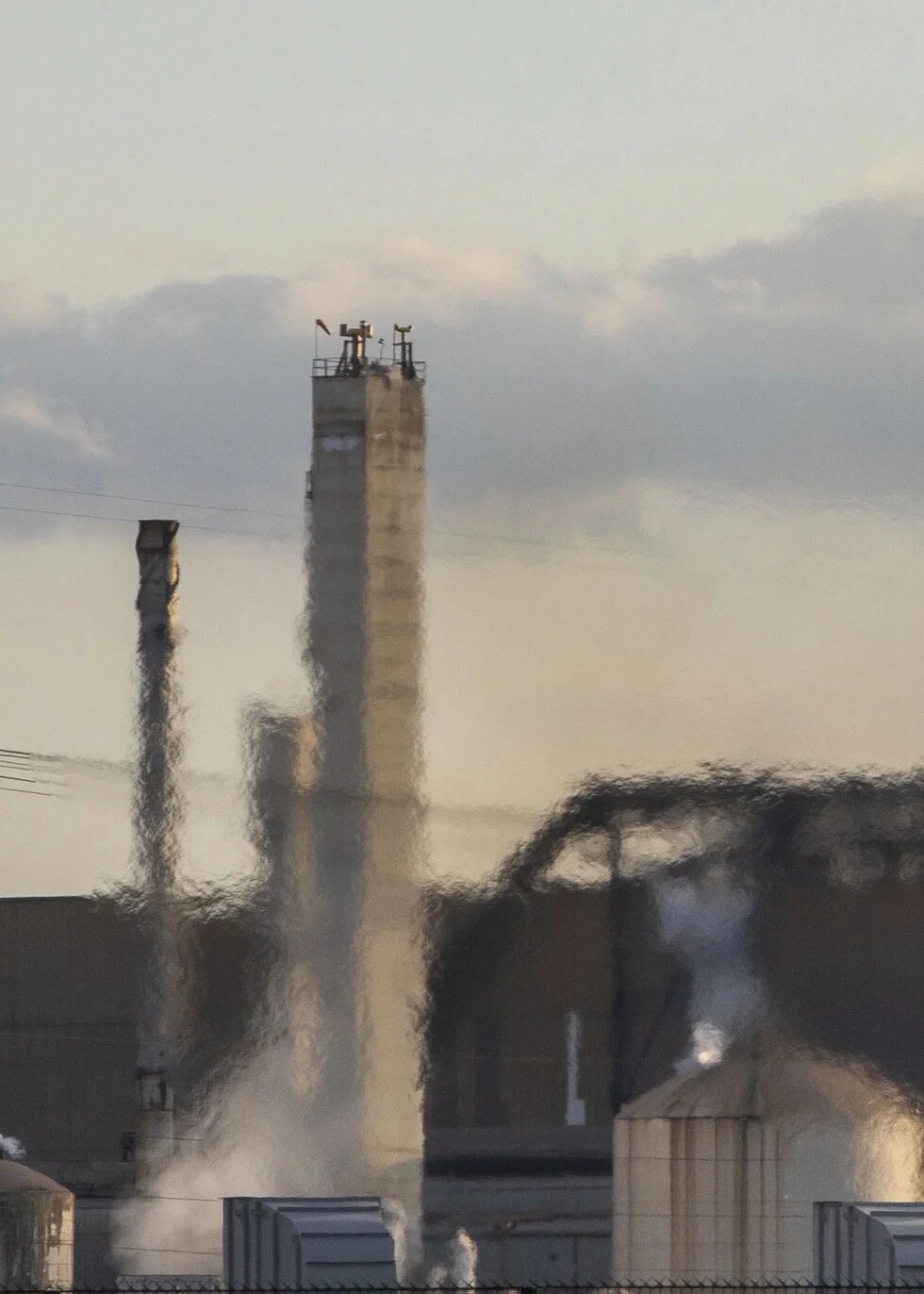
The gas generators operate around the clock, their engines droning day and night. The mechanical hum pulses from the facility, seeping into the soil, the air, the walls of nearby homes. Above the turbines, the air flickers and glitches. Dark fumes pour out in steady waves. The neighborhood is veiled in smog. The smell travels through the neighborhood –gas exhaust mixed with something chemical.
“It’s such a horrific smell,” KeShaun says, grimacing. He has had severe allergies since he was a little kid. The first few times he went near the facility without a mask, he got sick. His throat hurt. His voice changed. He stayed away for weeks.
“It smells like rotten cabbage early in the morning,” said Easter Knox. She lives just three miles away from the facility. Her neighbor, Alexis Humphries, first noticed the smell, when it woke her up in the middle of the night. She thought there was a gas leak, she recounted in a documentary for More Perfect Union.“I can’t breathe at home, it smells like gas outside,” she told reporters.
xAI brought the turbines to Memphis mere weeks after the deal was announced.
“You would just see trucks. A ton of trucks outside. And then you just saw construction. I mean, they were – it looked like they were just expanding the facility. They cut the grass all around the place. I mean, acres just cut down. And then you just saw them digging. And you saw a lot of dirt, repaving concrete, and just trucks. Tons of trucks.” says KeShaun, recalling the day they first moved in.
Then, on September 2nd, 2024, Musk announced that xAI had brought “the world’s biggest super computer” online.
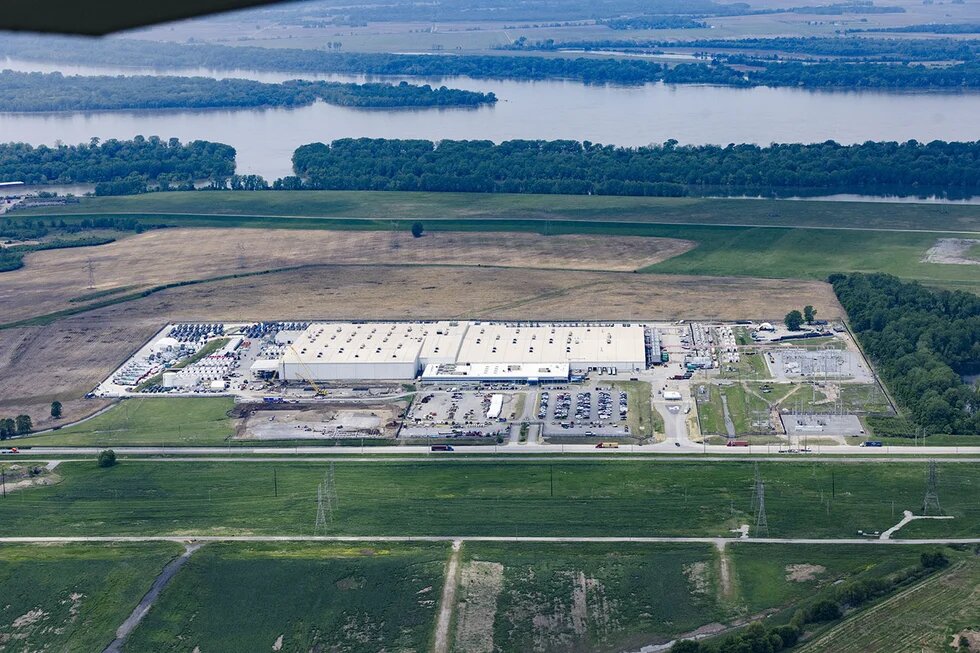
Its name, Colossus – a reference to the 1970 dystopian science fiction thriller “Colossus: The Forbin Project”, a cautionary tale about the dangers of unchecked artificial intelligence. In the movie, a defense supercomputer takes control of nuclear arsenals worldwide and declares itself “the voice of world control,” presenting humanity with the chilling ultimatum of “the peace of plenty and content, or the peace of unburied dead.” The alarm bells seem hard to ignore, except perhaps for Musk himself and fellow tech entrepreneurs like Nvidia CEO Jensen Huang, who was quick to praise Musk’s “superhuman” buildout of the facility.
When Musk started planning Colossus in early 2024, he was years behind in the AI race. He’d co-founded OpenAI in 2015, left in 2018, and didn't launch xAI until 2023 - watching from the sidelines as his former colleagues developed and dominated the market with GPT-4. Musk was desperate to catch up, but training large language models required extraordinary computational power.
Musk needed a location that could accommodate massive energy demands quickly, with minimal regulatory oversight.
Enter: Memphis.
The city sits above the Memphis Sands Aquifer, one of the largest sources of fresh groundwater in North America, critical for cooling a large number of hot-running engines. It has direct access to cheap power from the Tennessee Valley Authority. And it had available real estate: a vacant Electrolux factory that had been sitting empty since the company left town in 2022 after extracting tax breaks and public subsidies.
In the spring of 2024, the Greater Memphis Chamber of Commerce courted xAI. Chamber President Townsend and the head of Memphis Light, Gas and Water signed nondisclosure agreements with xAI and steered Musk towards the old Electrolux factory, which was already equipped with a gas hookup and a substation that could immediately supply power. The utility agreed to support xAI's request for 150 megawatts of power from the Tennessee Valley Authority.
The Memphis City Council, the County Board of Commissioners, and the TVA board itself were left out of those negotiations.
This pattern was already familiar for the residents of South Memphis.
In 2014, Electrolux had come to Memphis promising jobs and economic development. The city and county bought property for them, gave them tax breaks. Electrolux made promises about hiring, about investment. Then they left.
“They made huge profits and then they left,” KeShaun says. “For me, I think he wants to do the same thing. He wants to scam Memphis. He wants to exploit us and really extract as much as he can and leave.”
Memphis also offered something else. A place with a history where others would turn a blind eye – a place KeShaun himself describes grimly as a “sacrifice zone”. The facility sits on the banks of the Mississippi, a short drive from downtown, in an area where decades of redlining have concentrated Black residents near industrial facilities. This pattern of environmental racism is seen across the country: polluting infrastructure gets built in Black and Brown neighborhoods where residents have less power to say no. Boxtown, just a few miles away, is a predominantly Black working-class neighborhood already home to seventeen industrial facilities releasing toxic pollution – the Valero oil refinery and Tennessee Valley Authority plants among them.
“These same communities are being targeted by these corporations in order to do what has been dubbed now ‘digital redlining,’” KeShaun explains. “Digital redlining only reinforces the idea that our communities can be sacrificed.” Environmental justice advocates call these areas “sacrifice zones” – places where corporate profits matter more than people’s lives. “Elon Musk isn't the first to do this,” KeShaun says. “He’s following a pattern. Same pattern as Valero oil refinery. Same pattern as the Tennessee Valley Authority.”
Initially, community members expected xAI would connect to the municipal power grid. “Every data center we had researched, everything that the Memphis Light, Gas and Water said pointed us to the fact that they were going to plug in. And that's how they were going to get their power,” KeShaun says. Memphis Light, Gas and Water told the public not to worry when they began voicing concerns. The company had brought its own gas generators to power the data center while waiting for TVA board approval. The utility could handle it, they said.
Notably, that’s not what happened.
Memphis Light, Gas and Water couldn’t provide enough power. The utility offered 50 megawatts. Musk wanted triple that.
So, Musk brought in his own power source: gas turbines with enough capacity to power 280,000 homes.
Then, the turbines started running – without permits. The turbines should have required permits, but xAI claimed they were temporary – a designation that allows companies to operate generators for short periods during emergencies. “You're not able to use these turbines for that period of time and generate that amount of power. So it’s using a loophole,” KeShaun says. “They should have never had turbines on site at all.”
The turbines have been operating unchecked since June 2024.
“We're not asking for something that's unique. Every other company has to go before the Land Use Control Board, provide their planning and development goals,” KeShaun says.
"If I started a company today and I want to sell ice cream and I sold ice cream without a permit, you get shut down. So, you mean to tell me this billion-dollar project, they get exceptions?”
From the beginning, xAI has operated with an unparalleled lack of transparency. Even some Memphis city officials didn't know how the facility would be powered. The company won’t meet with the community. “Elon Musk and xAI, Brent Mayo his representative, the Greater Memphis Chamber, who acts as their marketing firm, won't meet with the community. Refuse,” KeShaun says. “They only meet with the wealthy in the city. What we are watching is literally corporate colonization.”
“It’s so disturbing,” KeShaun says.
“We couldn’t get a strong internet signal in Boxtown and you're down the street building the world‘s largest supercomputer.”
“You can walk down the street and get sugar, get whatever you need, honestly,” KeShaun says, describing what it was like growing up in Boxtown, the South Memphis neighborhood he calls home. Memphis, despite its 1.3 million population, is defined by its small-town culture: neighbors that look out for each other, everybody greeting each other, saying hello. “It's a real personable place,” he says. “Everybody's treating you like family.”
Much like his community, music too has played an integral part in his upbringing. His grandparents listened to the Commodores, the Temptations, Al Green, that golden era Motown sound. “You knew B.B. King's sound before you knew who B.B. King even was.”
KeShaun’s family was raised in the Mississippi Boulevard Christian Church. His father is a preacher. “It ties your everyday life to your spirituality,” he says, explaining further: “You’re always talking about God, always talking or singing or praying. Doesn't matter whose house you’re at, we pray before we eat. You can just expect it.”
That tradition of faith and community organizing runs deep in Memphis, rooted in a history that stretches back before the civil rights movement. In the late 1800s after Reconstruction Memphis became a nexus in the South for music and spiritual leadership, families from Mississippi and Alabama came to hear good music and be in community with other believers. Out of that emerged prominent preachers and leaders in the Black church. “And in that lineage is Dr. Martin Luther King Jr.,” KeShaun says.
During the civil rights era, when sanitation workers went on strike after the deaths of two workers in Memphis, Dr. King came to support them. “They went on strike because it was inhumane how we were treated,” KeShaun says. “And we could say it was the start of the environmental justice fight, because that environment caused that direct issue.” The “I Am a Man” march persisted. Dr. King joined. He was assassinated in Memphis on April 4 ,1968.
Mississippi Boulevard Christian Church, where KeShaun’s family worshipped, had thousands of members and was led by prominent pastors like Reverend Alvin O’Neal Jackson, who later went on to pastor in D.C. and New York. KeShaun’s father, now a pastor himself, was mentored by Jackson. “This whole lineage, we are now part of,” KeShaun says. “Born into it. Raised in it.”
KeShaun was born in Boxtown in 1989. His parents were still teenagers, fourteen and fifteen years old, when he was born. His family has been in Memphis for generations. They moved around a lot when he was young, living with grandmothers, aunts, uncles at different times. “Abject poverty is what they call it,” he says. “But we had what we needed. We didn't necessarily have the wants. And we really just struggled to find a real foundation. So, we moved around a lot. And that instability plays a role in how you view the world and how you try to search for different things within yourself.” When his parents couldn't afford his senior photos, his uncle paid for them. “It was all of us, all one big cohesive family.”
Then, both his grandmothers died of cancer. His father’s mother passed away in 2007. His mother’s mother in 2012. Then his uncle, the one who paid for his senior photos, died of cancer too. A year ago, his aunt was diagnosed with breast cancer. All of them lived in zip code 38109 most of their lives.
“Back then I had my family, everything, it's like the movies, right?” KeShaun says. “You go to T.O. Fuller Park to swim during the summers. There’re family gatherings all the time. We used to go to my grandmothers for Sunday dinner all the time. And then it's just gone.”
In 2023 KeShaun founded Memphis Community Against Pollution after a pipeline company wanted to come through the neighborhood. It was then when he learned that the cancer rate in South Memphis was four times higher than the national average. “It was nerve-wracking to me, and heartbreaking more than anything, to learn that there was no one protecting us,” he says. “To learn that there was no one doing the work of ensuring that our communities were breathing clean air, had clean soil and a healthy environment.”
He started connecting the dots. Valero oil refinery. Tennessee Valley Authority. Seventeen facilities releasing toxic pollution. Decades of concentrated particulate matter, of chronic exposure. “And it's not just a number to us. It's Black Sam passed away. My uncle passed away. So, it's the real human loss and the tragedy of the lost experiences and the lost memories we will never have.”
If his grandmothers were still alive, KeShaun says, his life would be completely different. “Everything would be different. It changes the whole trajectory of everything. I personally don’t want any families to experience what we have,” he says.
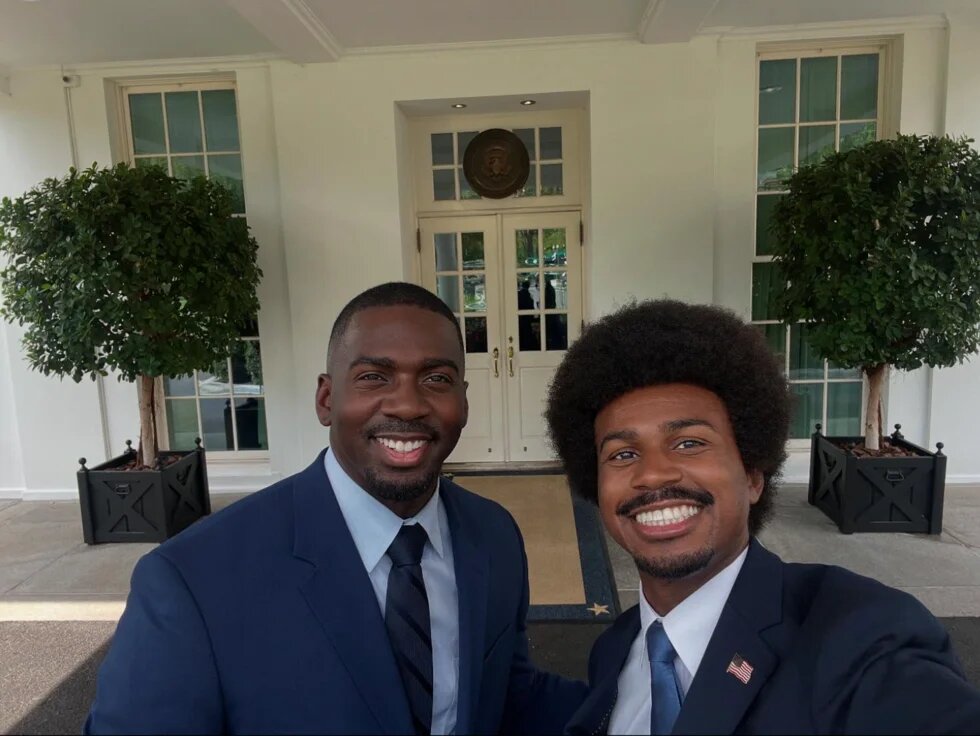
His brother, Justin, is a state representative in the Tennessee House of Representatives. “We see it as a blessing to be able to step in and represent our community in different ways, from the political side and from the community side,” KeShaun says. “Because it’s not just that the people who are proximate to the pain have the stories or have the suffering, we also have the solutions.”
“Coordinated chaos.”
That’s the term KeShaun uses to describe the deliberateness and orchestration behind what's been happening in Memphis – the climate of lawlessness enabled by almost every level of government, and the blatant disregard for Black lives that has made the town the epicenter of an environmental justice and health crisis.
An obvious question arises, namely, how it is possible for there to be so little enforcement and so little checks and balances that would allow this pollution to continue. xAI’s brazenness, it seems, knows no bounds.
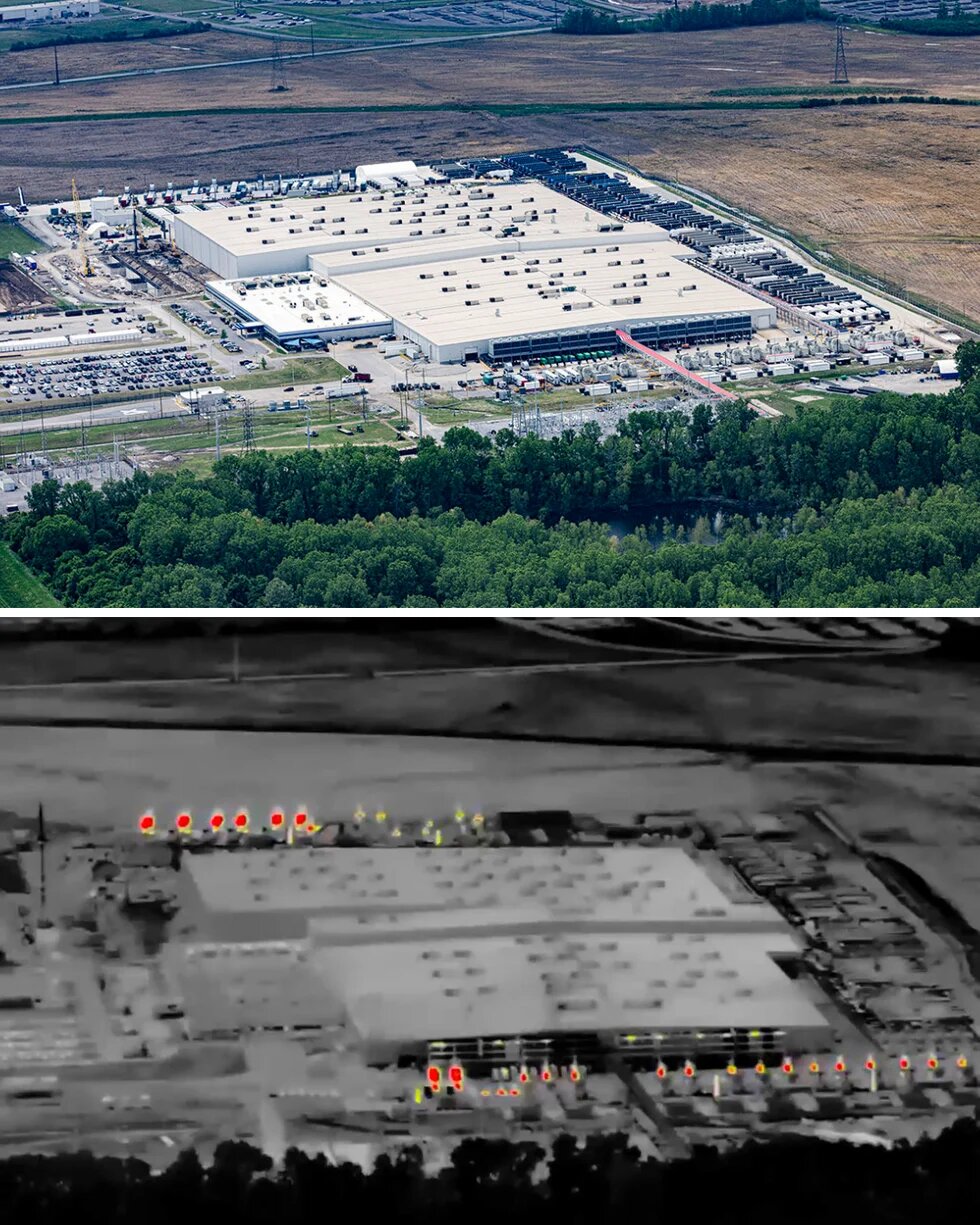
Taking justice into their own hands, the Southern Environmental Law Center flew over the xAI facility and found thirty-five turbines on site. The company had applied for permits for fifteen. Mayor Paul Young rushed to xAI‘s defense, saying only fifteen were actually running. SELC sent out a drone with thermal cameras and found thirty-three turbines giving off significant heat – unmistakable evidence they were generating electricity and pollution.
No one shut them down.
When KeShaun and thirteen families filed complaints with the Tennessee Department of Environment and Conservation, the agency cited staff reductions, and couldn't commit to investigating. The Shelby County Health Department, the agency responsible for enforcing air quality regulations, held a public hearing in April where they invited an xAI representative to read a prepared statement and leave. He didn’t stay to hear from the community, didn’t offer anything, didn't look them in the eyes when reading this prepared statement.
“This is where we get into the confusion of Memphis politics,” KeShaun explains. “The Shelby County Health Department is over the regulating of our air and our water and ultimately public health, making sure we have a healthy environment to live.”
But the Health Department's track record suggests otherwise. KeShaun points to Sterilization Services of Tennessee, which emitted ethylene oxide, a known carcinogen, for years. “We pleaded with the Shelby County Health Department to shut them down,” he says. The department's response was to hold a community town hall. Then-director Michelle Taylor opened by saying: “People have to change their diets. You can‘t cook barbecue and smoke cigarettes and expect to be healthy.”
“That's been the attitude around pollution – that it's a personal failing,” KeShaun says. “It's not something that corporations are literally doing by spewing out all of these toxic pollutants.”
When it came to xAI, the Shelby County Health Department said the turbines, because they were temporary, fell under EPA oversight. An EPA spokesperson said in July the agency was working with the local health department to review concerns. In July, the Health Department approved xAI's permit request for fifteen permanent gas turbines, stating they would be used strictly as backup and that the temporary turbines were acceptable as long as they were removed within a year.
Meanwhile, researchers at the University of Tennessee analyzed satellite data at TIME magazine‘s request. They found that peak nitrogen dioxide concentration levels increased by 79% in areas immediately surrounding the data center and by 9% in nearby Boxtown.
Austin Dalgo, a physician in South Memphis, called the jump in peak nitrogen dioxide levels “alarming” in an interview with TIME. “The xAI turbines are leading to a public health crisis in Memphis by releasing nitrogen oxides – pollutants known to directly harm the lungs. These emissions pose the greatest risk to our city's most vulnerable residents, including children, the elderly, and individuals with respiratory conditions like asthma and COPD.”
Last year, the city of Memphis commissioned its own study. They came to the conclusion that the air in Boxtown was safe. But the study’s methodology was deeply flawed, as monitors were placed at only three locations over two twelve-hour periods and didn't measure key pollutants like ozone.
xAI and the Greater Memphis Chamber insisted the turbines were legal, generated negligible pollution, and were only temporary. In April, a representative for xAI told a hearing the company would install upgrades that would make xAI “the lowest-emitting facility in the country.” The company claimed those upgrades were to be completed over the summer.
“I don’t think people are concerned about pollution because they know who is going to suffer,” KeShaun says. “The politicians and the people in Shelby County Health Department, these people are well off. They don’t live anywhere close. They live far out in the suburbs. And what they don't understand is that we all are suffering. The air doesn’t pay attention to our imaginary lines that separate us. It’s not real. We are all breathing in worse and worse air. And it’s because of the corporations that are allowed to pollute the air.”
Memphis Community Against Pollution raised $250,000 to conduct their own study, installing nine air quality monitoring devices. The readings consistently show dangerous levels of pollution.
In June, the NAACP sent an intent-to-sue notice to xAI for violating the Clean Air Act. “Over the last year, xAI installed and operated dozens of unpermitted methane gas turbines at its Memphis data center, essentially building a power plant without any public oversight or input from nearby communities,” said Amanda Garcia of the Southern Environmental Law Center. “These turbines pump out smog-forming pollution and harmful chemicals like formaldehyde and are located near predominantly Black communities that are already overburdened with a long history of environmental injustice.”
The precedent troubles community members more than the pollution itself: companies can now operate without permits as long as they claim it's “temporary.”
Meanwhile, Musk is building an even bigger data center a few miles away in Whitehaven. It’s double the size of the first, powered by a plant imported from overseas. In August, sixty-six more gas turbines paid for by an xAI subsidiary were delivered to that site.
“Memphis is the poster child for corporations overpromising and never delivering,” KeShaun says. “There has never been a situation where these billion-dollar organizations have done a measurable change to our environment economically.
The economic strangulation of Memphis and the people of Memphis is because of how these corporations have been able to operate and really suck Memphis dry. It's a constant game. And it’s insanity because it's the same thing over and over and expecting a different result.”
He traces the pattern through history. FedEx came to Memphis, built factories, everyone worked in the factories. Wages stayed the same. Amazon came, built more factories. Same pattern. “It's literally a plantation economy,“ he says. “Wages stay the same. Wages don’t increase with inflation. People still struggle to pay their bills.”
When xAI arrived, the Greater Memphis Chamber promoted a “digital delta” vision, Memphis as the South's tech hub, with software companies and skyscrapers and wealth flowing in. “It makes people think in their minds Apple and Google,” KeShaun says. “You think it’s about software companies and lots of money flowing in because people are wealthier and doing better. That's not happening.”
He describes it as “the boiling a frog to death scenario where you just incrementally turn the heat up over time and then it dies. But the frog could jump out, but it won’t. It’s that type of scenario where these infinitesimal changes lock people into poverty cyclically.”
What’s been happening in Memphis is part of a bigger development playing out across the country.
The skyrocketing demand for artificial intelligence and the so called “global AI race” have led to a proliferation of data centers across the country. In 2024 alone, data center supply under construction grew by 34%. There are now more than 4,000 data centers across the country, not including the number currently being built and applied for.
The Trump administration’s disastrous track record on climate ties directly into that.
Shortly after taking office, Trump declared a “national energy emergency”, announcing his “energy dominance agenda” and issued an executive order directing federal agencies to speed AI development with minimal oversight. His Action Plan proposes exempting data centers from key environmental protections – most critically, creating exemptions from the National Environmental Policy Act and pursuing a nationwide Clean Water Act permit that would allow data centers to be built without public notice.
“The Trump administration has manufactured barriers and a fake sense of urgency to roll back public safeguards that help the richest companies in the world at the expense of communities across the South,” said Alys Campaigne of the Southern Environmental Law Center. “And ironically, it is calling for an energy boom to support AI while blocking solar, wind, and storage which are the fastest, cleanest, cheapest options to meet demand.”
The plan has critically enabled what’s been happening in Memphis: massive infrastructure built without public input, operating without required permits, with no consequences for its unchecked operation.
The AI push also fits into Trump’s broader agenda focused on boosting fossil fuel production. Since Trump’s inauguration, the Environmental Protection Agency launched what the administration calls the “biggest deregulation effort in its history”, targeting climate rules, emissions standards, and water protections.
“There is no way to disassociate federal oversight from extremely large infrastructure buildout. No way,” KeShaun says, frustrated. “The federal government is to be involved, will be involved, because of everything that is at stake and how so many intersectional issues are involved. These aren't just financial decisions, but these are land-use decisions. These are environmental decisions. So, you're thinking about the EPA, but you're also thinking about it from a national security perspective and an energy perspective. And so when all of these projects are popping up everywhere all at once, it's not a mistake. That’s by design.”
KeShaun sees the federal government rolling back protections as enabling what he believes is “one of the worst bubbles, market bubbles, that we have ever seen. Because there’s no real product that people are rushing to buy. Nobody’s standing in line for AI products. That’s not a thing. But they’re investing and over-leveraging billions and billions and billions of dollars.”
The pattern mirrors what’s been happening in Memphis. “Memphis is a microcosm of the bigger thing,” KeShaun says. “Because in Memphis, you have the oligarchs who come, Elon Musk, then you have the public institutions who protect them. You’ve got the city mayor, the Shelby County Health Department who are insulating them and protecting them and allowing them to move forward without thinking about the people.” In Memphis, he explains, the Tennessee Valley Authority says ‚here’s all the power you want.’ The Memphis EDGE Board says ‘here’s all the land you want.’ The mayor and the Shelby County Health Department, institutions where people are appointed to protect residents, aren’t doing their jobs. “Make that bigger,” KeShaun says. “On a federal scale, you got the administration saying, ‘Okay, you can do everything you want to get all the energy you want to get.’ You got the federal government also saying with dismantling the Clean Air Act, ‘Hey, you can do everything you need.’ And then you got the backing of the head of the administration. ‘Go forth. We're going to do everything we can to protect you.’ So, who’s there to protect the people?”
The outcome, KeShaun says, will be catastrophic if allowed to continue without guardrails or protections. “Three hundred thousand Black women are out of work. Like this is catastrophic already for the Black community. We continue to see higher levels of death in places where industry is juxtaposed to Black communities. This isn’t numbers. This is real. The catastrophe is already here for us. We already feel it. We’re already suffering through it.”
The AI race, opportunistically framed as a national security and economic imperative, thus becomes the justification for bypassing the protections that communities like South Memphis need.
KeShaun is sitting across from me. We’ve been talking for nearly two hours. He’s been telling me about Memphis, about his upbringing, about the data center – about everything that's happened since that meeting with the mayor on that day in June 2024.
I ask him if his personal outlook on AI has changed – if he thinks about AI differently than he did before.
He looks surprised.
“I’ve never been asked that question before.”
He takes a breath, assembling his thoughts.
Then he goes on to say:
“We have to understand that AI isn’t free. AI costs us. And in our instance specifically, AI costs us our clean air. It’s costing us our clean air. And now it’s costing people their sleep. It's costing people their peace.”
He sees the hyper-scaling of data center infrastructure and the hyper-selling of AI as an end-all solution as deeply misleading. “My own personal belief is that this stuff is overhyped. It's not sentient. It’s not going to be sentient in the next couple years. This is a predictive language model. This is not intelligence.”
“But these gigawatts of power, these millions of gallons of water per day that we’re losing, that's not coming back, only lends us into a worse position with the rising climate,” KeShaun says. “You got the climate rising. Climate migration is already starting and we’re depleting our water. That’s not smart in any way. And we’re doing this for a product. People are telling us it’s going to solve what, actually? What is AI solving? What has AI solved?”
The question nobody seems to be asking, he says, is who benefits. He reminds me that AI isn’t free, that when the product is free to use, you are the product. Large language models are trained on user data. People are contributing to it without knowing. Their data, their information, their habits are being manipulated and tracked. Companies can model what you buy at the grocery store, approximate how often you go to the movies, create demand for products you didn’t ask for.
AI, in this current moment, he believes, is a great idea that "needs a lot more nurturing, a lot more ethical development. It’s right now being used to torpedo our entire society. It’s not being regulated in any way.”
Meanwhile, Musk is building an even bigger data center a few miles away in Whitehaven, double the size of the first, powered by a plant imported from overseas. In August, sixty-six more gas turbines paid for by an xAI subsidiary were delivered to that site.
Memphis Community Against Pollution raised $250,000 for air quality monitors and built a GIS system to track pollution data, documenting what the city won’t. The Southern Environmental Law Center provided documentation on the turbines. It’s all on their website.
“This is about a widespread rezoning of our country in order to support the whims of these billionaire oligarchs,” KeShaun says. “We have to pass legislation and we have to enforce legislation that already exists. Protect your people. We protect us. That means organizing, passing legislation, and forcing people to enforce the legislation that protects your air, water, and your environment.”
“For me, it is reassurance that God is on our side, honestly, to be able to put out a call for help and be met by so many people in the community who also deeply care about what’s going on and deeply care about protecting our future.”
“I promise you, there are a lot of days where it gets tiring making the phone calls, constantly having to listen to elected people or appointed officials tell you what they can’t do when you’re literally asking them to do their job to help people.
Constantly fighting and constantly having to listen to them do this in your face over and over and over is draining. But then you look to your left and you look to your right and who’s there with you? The whole community. And God is right there with you. That’s wonderful.”
A heartfelt thank you to KeShaun Pearson for sharing his story and for his invaluable work advocating for Memphis communities. You can support his organization Memphis Community Against Pollution by visiting www.memphiscap.org and signing their petition.
Endnotes
Andrew R. Chow, “’We Are the Last of the Forgotten:’ Inside the Memphis Community Battling Elon Musk’s xAI,” Time, August 13, 2025, accessed December 18, 2025, https://time.com/7308925/elon-musk-memphis-ai-data-center/.
More Perfect Union, “We Went to the Town Elon Musk Is Poisoning,” YouTube video, May 30, 2025, accessed December 18, 2025, https://www.youtube.com/watch?v=3VJT2JeDCyw
Elon Musk (@elonmusk), “This weekend, the @xAI team brought our Colossus 100k H100 training cluster online. From start to finish, it was done in 122 days. Colossus is the most powerful AI training system in the world. Moreover, it will double in size to 200k (50k H200s) in a few months. Excellent work by the team, Nvidia and our many partners/suppliers,” X (formerly Twitter), September 2, 2024, accessed December 18, 2025, https://x.com/elonmusk/status/1830650370336473253.
Letterboxd. “Colossus: The Forbin Project (1970)”, Accessed December 18, 2025. https://letterboxd.com/film/colossus-the-forbin-project/
Alexander Saeedy, “Elon Musk Gambles Billions in Memphis to Catch Up on AI,” Wall Street Journal, October 5, 2025, accessed December 18, 2025, https://www.wsj.com/tech/elon-musk-xai-memphis-tennessee-power-dec4c70d.
Ariel Wittenberg, “’How come I can’t breathe?’: Musk’s Data Company Draws a Backlash in Memphis,” Politico, May 6, 2025, accessed December 18, 2025, https://www.politico.com/news/2025/05/06/elon-musk-xai-memphis-gas-turbines-air-pollution-permits-00317582.
Southern Environmental Law Center, “New Images Reveal Elon Musk’s xAI Datacenter Has Nearly Doubled Its Number of Polluting, Unpermitted Gas Turbines,” press release, April 9, 2025, accessed December 18, 2025, https://www.selc.org/press-release/new-images-reveal-elon-musks-xai-datacenter-has-nearly-doubled-its-number-of-polluting-unpermitted-gas-turbines/.
National Museum of African American History and Culture, “Mourning the Death of Martin Luther King Jr.,” Smithsonian National Museum of African American History and Culture, accessed December 18, 2025, https://nmaahc.si.edu/explore/stories/mourning-death-martin-luther-king-jr.
Tennessee General Assembly, “Representative Justin J. Pearson — District 86,” Tennessee General Assembly, accessed December 18, 2025, https://wapp.capitol.tn.gov/apps/legislatorinfo/member.aspx?district=H86.
Southern Environmental Law Center, “Elon Musk’s xAI Facility Is Using Gas Turbines in South Memphis, We’re Taking Action,” Southern Environmental Law Center news, June 17, 2025, accessed December 18, 2025, https://www.selc.org/news/resistance-against-elon-musks-xai-facility-in-south-memphis-gets-stronger/.
Southern Environmental Law Center, “Groups Appeal Permit for xAI’s South Memphis Data Center, Decisions around Unpermitted Methane Gas Turbines,” press release, July 16, 2025, accessed December 18, 2025, https://www.selc.org/press-release/groups-appeal-permit-for-xais-south-memphis-data-center-decisions-around-unpermitted-methane-gas-turbines/.
City of Memphis, “City of Memphis Releases Initial Air Quality Testing Results: No Dangerous Levels Detected,” City of Memphis News, June 24, 2025, accessed December 18, 2025, https://memphistn.gov/city-of-memphis-releases-initial-air-quality-testing-results-no-dangerous-levels-detected/.
LocalMemphis.com, “MCAP Announces $250K Investment in Air Quality Monitoring in Southwest Memphis,” LocalMemphis.com, July 2, 2025, accessed December 18, 2025, https://www.localmemphis.com/article/tech/science/environment/mcap-250k-investment-air-quality-monitoring-southwest-memphis/522-bcaefaf2-56a4-412d-8f2d-c9e1c02d7bb6
National Association for the Advancement of Colored People, “Elon Musk’s xAI Threatened with Lawsuit over Air Pollution from Memphis Data Center, Filed on Behalf,” NAACP, June 17, 2025, accessed December 18, 2025, https://naacp.org/articles/elon-musks-xai-threatened-lawsuit-over-air-pollution-memphis-data-center-filed-behalf
Southern Environmental Law Center, “Trump’s ‘AI Action Plan’ Would Let Billionaire Tech Companies Steamroll Local Communities,” press release, July 23, 2025, accessed December 18, 2025, https://www.selc.org/press-release/trumps-ai-action-plan-would-let-billionaire-tech-companies-steamroll-local-communities/.
CBRE Group, “North American Data Center Construction Hit New Heights in 2024 Amid Surging Demand,” press release, February 27, 2025, accessed December 18, 2025, https://www.cbre.com/press-releases/north-american-data-center-construction-hit-new-heights-in-2024-amid-surging-demand/
Data Center Map, “USA Data Centers – 4,297 Facilities from 50 States,” Data Center Map, accessed December 18, 2025, https://www.datacentermap.com/usa/
Dakin Campbell and Hannah Beckler, “See Where Data Centers Are Across the US on Our Interactive Map,” Business Insider, September 29, 2025, accessed December 18, 2025, https://www.businessinsider.com/data-center-locations-us-map-ai-boom-2025-9.
Trump, Donald J. “Declaring a National Energy Emergency.” Presidential Action. The White House. January 20, 2025. Accessed December 18, 2025. https://www.whitehouse.gov/presidential-actions/2025/01/declaring-a-national-energy-emergency/.
The White House, America’s AI Action Plan (Washington, DC: The White House, July 2025), accessed December 18, 2025, https://www.whitehouse.gov/wp-content/uploads/2025/07/Americas-AI-Action-Plan.pdf.
Arcelia Martin, “Trump’s AI Action Plan Waives Federal Environmental Rules in the Development of Data Centers,” Inside Climate News, July 24, 2025, accessed December 18, 2025, https://insideclimatenews.org/news/24072025/trump-ai-action-plan-waives-federal-environmental-rules/.
Janice Gassam Asare, "No Friends in the Pipeline: Why 300,000 Black Women Were Pushed Out of the Workforce," Forbes, August 4, 2025, accessed January 8, 2026, https://www.forbes.com/sites/janicegassam/2025/08/04/no-friends-in-the-pipeline-why-300000-black-women-were-pushed-out-of-the-workforce/.
U.S. Environmental Protection Agency, “EPA Launches Biggest Deregulatory Action in U.S. History,” news release, March 12, 2025, accessed December 18, 2025, https://www.epa.gov/newsreleases/epa-launches-biggest-deregulatory-action-us-history