The Iran Advisory Group convened its 10th meeting on May 30, 2014 in Beirut, Lebanon. The seminar shed some light on the impact the domestic dynamics under President Rouhani have on Iran’s regional policy agenda.
This paper, by Foreign & Security Policy trainee Fabian Staudenmeyer, identifies US and Russian primary interests regarding the Syrian crisis, and aims to analyze to what extent they have been advanced respectively in the UNSC.
Examining the trajectory of U.S. assistance to the Middle East and North Africa, there is little evidence to suggest that support for democracy, governance, and human rights is now any higher of a priority for the U.S. government than it had been before the uprisings of 2011.
Until now, transitional justice has, in many places, failed to address gender dimensions but increasingly so the issues of inequality, hierarchies and violence patterns. This study details these problems and presents the resulting challenges facing politicians and society.
Afghan women have brought together a very personal account of achievements they have made over the last decade and they have lined out their interest in how the transformation decade beyond 2014 should look like for Afghan women.
Iranian President Hassan Rouhani is seeing escalating public criticism from Iran's conservative factions, once seemingly stifled by Supreme Leader Ali Khamenei. Will Rouhani's presidency follow in the footsteps of the Mohammad Khatami era? HBS and the Stimson Center hosted a panel discussion on the shifting internal political dynamics in Iran.
Perspectives is a publication series of the Africa offices of the Heinrich Böll Stiftung. With this series, we intend to let experts from Africa express their views about current political issues in their region. Perspectives focuses on Southern- , East- and West Africa where the foundation has established offices.
The Stimson Center and the Heinrich Boll Foundation North America held a discussion on positive social and political changes in Iran, the role of Iranian youth in changing the political culture and the implications of a Rouhani presidency on the future of US-Iran relations. Watch the recorded event here
United States has decided to host a nuclear security summit in 2016, which would be the fourth such meeting to strengthen and deepen the "existing nuclear security architecture" before the summit process ends. Although a July 2013 ministerial-level conference on the topic played an important role in strengthening and institutionalizing nuclear security, the White House does not deem progress in this area to be sufficient for the summit process to end.
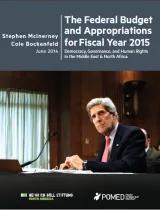
This report, authored by POMED's Executive Director Stephen McInerey and Advocacy Director Cole Bockenfeld, offers a detailed look at U.S. funding and assistance for democracy and governance in the Middle East, the congressional appropriations process, and implications for U.S. policy in the Middle East during a turbulent time.